
Asbestos Floor Tile Removal Newark NJ | Vinyl Asbestos Tile Specialists
Licensed removal of vinyl asbestos tile (VAT) and asbestos-containing floor adhesive in Newark and Essex County residential and commercial buildings. Safe, compliant abatement with documentation and air clearance.
Quick Answer
Vinyl floor tiles in Newark NJ buildings constructed before 1980 frequently contain asbestos, as do the mastic adhesives used to install them. Nine-inch and twelve-inch tiles manufactured in this era are among the most commonly confirmed asbestos-containing materials in Essex County properties. Testing is required before any removal, grinding, or sanding. Licensed removal must follow NJ Admin Code 12:120 protocols including containment, wet methods, and air clearance testing. In some cases, intact VAT can be covered rather than removed.
Identifying Asbestos Floor Tiles
How to Recognize Potential VAT in a Newark Building
Vinyl asbestos tile (VAT) was one of the most widely used flooring materials in the United States from the 1950s through the 1970s. It was installed in homes, schools, hospitals, office buildings, and commercial spaces across the country, and Newark’s pre-1980 building stock is full of it.
The most reliable visual indicators that a floor may be VAT include tile size (9-inch by 9-inch tiles are a very strong indicator, as this size was extremely common for VAT; 12-inch tiles are also suspect), the era of the building, and visible aging characteristics like brittleness, cracking, or a yellowed appearance in older tiles. However, you cannot confirm asbestos content visually, and tiles of the same size and era do not all contain asbestos at the same levels. Testing is the only reliable method.
The adhesive beneath the tile is equally important. “Black mastic” asphalt adhesive used to install floor tiles in this era commonly contains asbestos. Even when floor tiles themselves test negative, the underlying adhesive may be positive. Both materials must be tested, and both must be abated if positive results are found.
The floor tile situation in Newark is common: in row houses, multi-family buildings, and commercial storefronts built before 1980, VAT and mastic adhesive are the floor system in many rooms. When landlords and homeowners renovate to install hardwood, luxury vinyl, or tile over existing floors, they frequently encounter this material. The renovation trigger is the most common reason clients call us about VAT.
Removal, Covering, or Encapsulation: What Are Your Options?
Licensed Removal
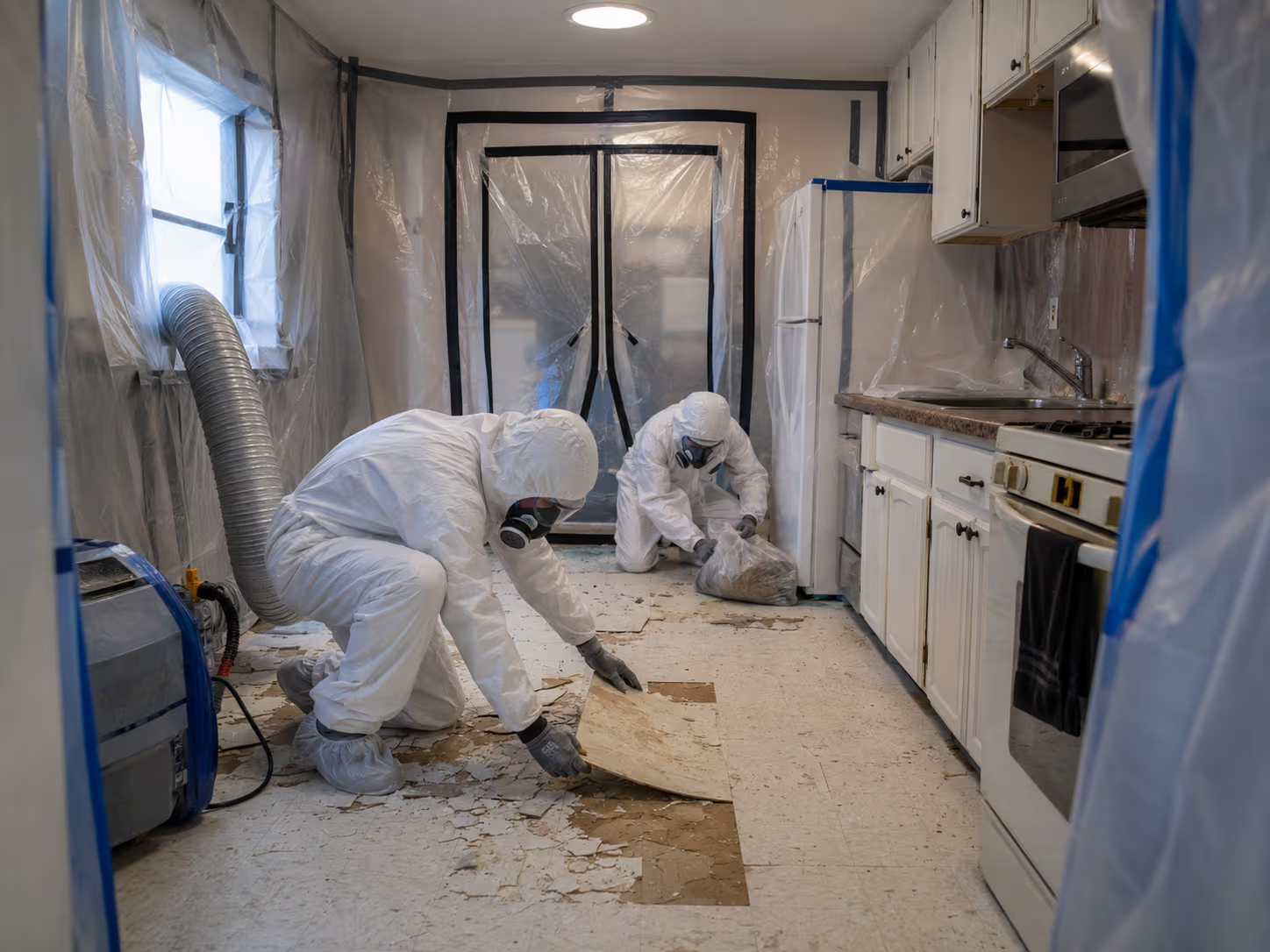
Licensed abatement of VAT involves containment of the affected area, use of heat guns or chemical solvents to soften and lift tiles (not grinding or sanding), careful removal of the adhesive layer, and HEPA decontamination of the substrate. Full containment with negative air pressure, appropriate PPE, and air clearance testing is required. This is the preferred approach when the floor will not be covered and a clean substrate is needed for new flooring installation.
Covering In Place
Intact, non-friable VAT in good condition may in some cases be covered rather than removed. New flooring can be installed over undisturbed VAT as long as the new installation does not require cutting, grinding, or drilling through the existing tiles. This is not a regulated abatement activity, but it does require documentation that the covered material is asbestos-containing, and that information must be maintained with the property records and disclosed appropriately in future transactions.
Encapsulation
When VAT is in good condition and will not be disturbed, sealing it with an approved encapsulant is a licensed, regulated option that immobilizes the fibers in place without physical removal. Like covering, this is an in-place management solution that requires documentation, disclosure, and ongoing monitoring. See our encapsulation page for full details.
Grinding or sanding VAT is strictly prohibited under NJ regulations, even by licensed contractors. These activities release high concentrations of asbestos fibers. If a contractor proposes grinding asbestos floor tiles, that is a serious red flag about their knowledge of NJ abatement law.
What Newark Property Owners Need to Know Before Any Floor Renovation
Floor renovations are one of the most common triggers for asbestos-related compliance issues in Newark’s older residential and commercial buildings. Homeowners planning to update flooring, contractors bidding on renovation work, and landlords turning over units all encounter VAT regularly. The process is straightforward: test first, then decide on the appropriate response.
We handle testing, abatement, and documentation for floor tile projects throughout Newark and Essex County. Our process begins with a licensed inspector collecting samples from both the tile and the adhesive in the affected areas. Lab results are typically available within 24 to 72 hours. If positive, we provide a written abatement scope and firm quote. We coordinate with your flooring contractor or general contractor to minimize project delay.
One practical point that is worth knowing: if VAT is confirmed asbestos-positive and you are planning new flooring installation immediately after removal, we can coordinate the sequencing to minimize total project time. Abatement, clearance, and the flooring installation can often be sequenced within a week for a typical residential floor area. Call (973) 561-2655 or review our testing page and removal page for full details on each stage.
Common Questions
Floor Tile Asbestos Questions
Not always, but 9-inch vinyl floor tiles manufactured before 1980 are among the most commonly confirmed asbestos-containing materials in residential properties from that era. The 9-inch format was extremely prevalent in VAT manufactured during the period when asbestos was a standard additive in floor tile production. This does not mean every 9-inch tile contains asbestos, but it does mean every 9-inch tile in a pre-1980 Newark building should be treated as suspect and tested before any removal or disturbance. Testing is inexpensive relative to the risk of proceeding without it. Do not rely on appearance, color, or pattern to make the determination.
In many cases, yes. Installing new flooring over intact, undisturbed VAT is a widely practiced approach that avoids the cost and disruption of abatement. The key requirements are that the existing tiles must be in stable, intact condition with no crumbling, cracking, or delamination, and the installation method for the new flooring must not require cutting, grinding, drilling, or otherwise disturbing the existing tiles. The presence and location of the covered VAT must be documented with the property records and disclosed in any future transaction. A flooring contractor who proposes to grind down high spots in VAT before installing new flooring is proposing a prohibited activity. Make sure your flooring contractor understands that the existing tiles are asbestos-containing material before they begin.
Cracked, broken, or friable VAT is more of a concern than intact tiles because damaged tile edges can release fibers, particularly when they are walked on or disturbed by furniture movement. However, VAT is generally considered a non-friable material and even damaged tiles typically present a lower immediate risk than friable pipe insulation. The appropriate response to cracked or damaged VAT is to test the tiles, have the damaged areas assessed by a licensed inspector, and determine whether encapsulation, spot abatement of the damaged areas, or full removal is the right approach. Do not attempt to clean up broken tile debris by vacuuming with a standard household vacuum, as this can aerosolize any fibers that are present. Call us for an assessment.
The cost of VAT abatement in Newark NJ depends on the area of floor being treated, the number of rooms, accessibility, and whether the adhesive must also be removed. We provide a written quote with a firm price after a free site assessment. The cost of licensed abatement is predictable when you know the scope. What is not predictable is the cost of proceeding without proper abatement and then discovering a compliance problem that requires emergency remediation on top of the original project cost. Call (973) 561-2655 to schedule your free assessment and get a clear picture of what is involved before any flooring work begins.
Service Area