
Pipe Insulation Asbestos Removal Newark NJ | Safe Removal of Friable Materials
Licensed removal of asbestos-containing pipe wrap, elbow covers, and boiler insulation in Newark and Essex County residential and commercial properties. Friable materials require careful handling and certified abatement protocols.
Quick Answer
Asbestos pipe insulation in Newark NJ is among the most common and most hazardous types of confirmed ACM in pre-1980 buildings. It becomes especially dangerous when it deteriorates, cracks, or is physically disturbed. Licensed removal requires full containment, HEPA filtration, wet suppression techniques, and air clearance testing. Testing must be completed before any plumbing, HVAC, or insulation work disturbs suspect materials. Contact us for a licensed assessment before beginning any work in a basement or mechanical room of an older Newark building.
The Hazard
Why Pipe Insulation Is One of the Highest-Risk Asbestos Materials in Newark Buildings
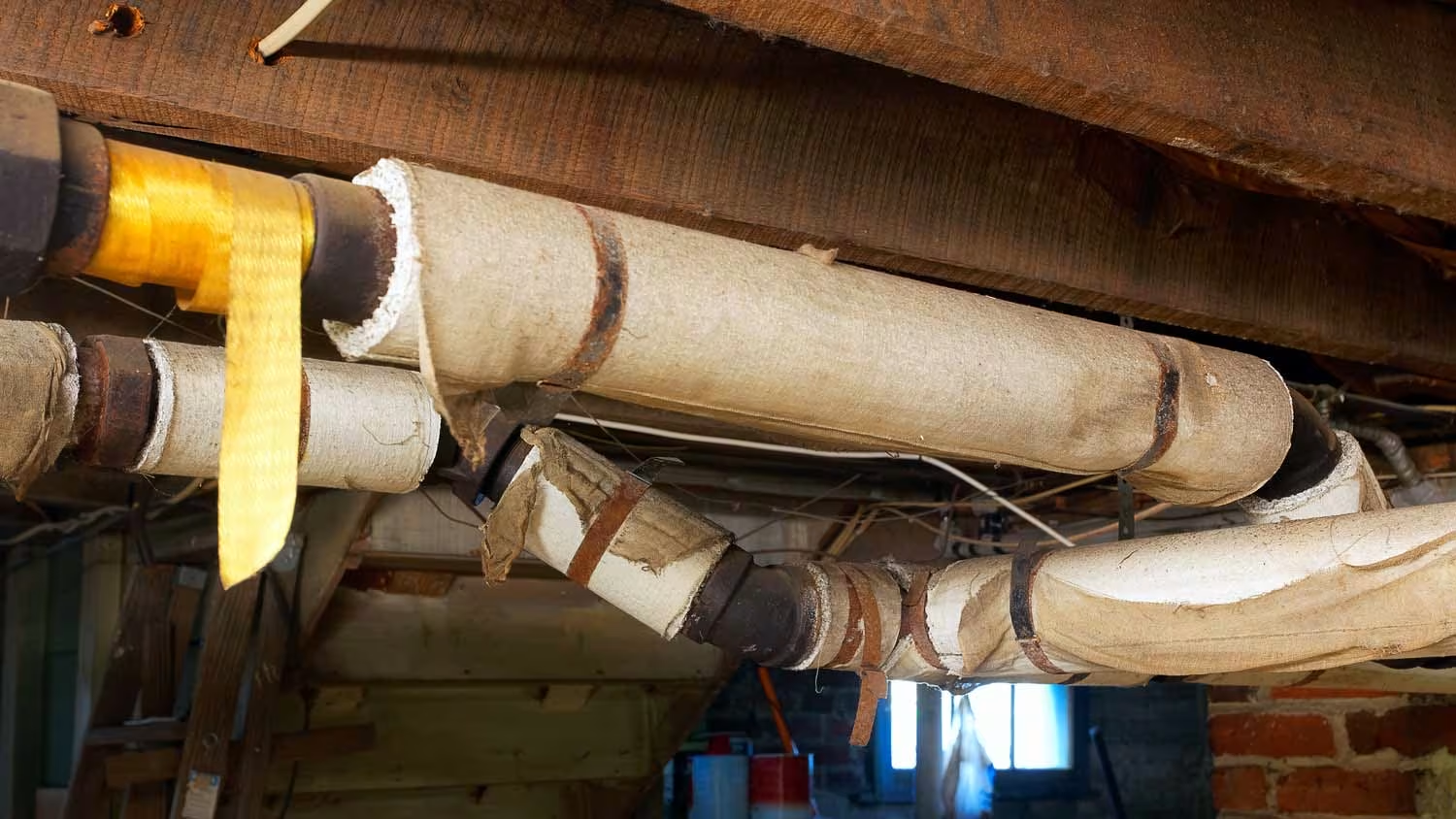
Asbestos was used extensively in pipe insulation, boiler wrap, and duct insulation throughout the era of pre-1980 construction. In Newark’s aging housing and commercial stock, this material is encountered in basement utility rooms, mechanical chases, and throughout plumbing systems in virtually every pre-1980 building.
The particular concern with pipe insulation is friability. Friable asbestos is material that can be crumbled, broken, or reduced to powder by hand pressure. When pipe insulation is friable, even minor disturbance releases a significant concentration of fibers into the air. Deteriorated pipe insulation that is already crumbling or flaking is releasing fibers on its own without any mechanical disturbance. These conditions represent the highest-urgency asbestos situations in residential and commercial buildings.
Common forms of pipe insulation that may contain asbestos in Newark properties include: corrugated paper wrap on steam pipes, pre-formed pipe covers on hot water and steam lines, elbow fittings and “mudded” joints, boiler insulation and block insulation on heating equipment, and flexible insulation wrap on HVAC duct work. Any of these materials in a pre-1980 building should be treated as suspect and tested before any work is performed in the vicinity.
Plumbers, HVAC technicians, and renovation contractors who work in older Newark basements without testing first put themselves and building occupants at serious risk. A licensed assessment before any mechanical work in a pre-1980 building is not optional, it is required under NJ Admin Code 12:120.
Removal vs. Encapsulation for Pipe Insulation
When Removal Is Required
Pipe insulation removal is required when the material is friable or deteriorated, when it must be disturbed by planned plumbing or HVAC work, or when the building is being renovated or demolished. Friable pipe wrap that is already crumbling is a priority for removal even in the absence of planned work, because it is already releasing fibers passively into the building environment.
Removal involves full containment of the work area, negative air pressure with HEPA filtration, wet suppression of all materials during removal, packaging in approved containers, and air clearance testing before re-occupancy. For basement utility rooms with extensive pipe systems, this is typically a 1 to 3 day project.
When Encapsulation Is an Option
For pipe insulation that is in good, stable condition (not friable, not deteriorating, not crumbling) and will not be disturbed by planned work, encapsulation with an appropriate penetrating encapsulant is sometimes appropriate. This involves thoroughly applying encapsulant to stabilize the material surface and bind any loosely attached fibers.
Encapsulation is not appropriate for materials that are already friable, that have significant physical damage, or that will be disturbed by any planned work. We assess the specific condition of materials during the initial site visit and recommend the correct approach for each area. See our encapsulation page for full details.
For Contractors and Tradespeople Working in Newark Buildings
If you are a plumber, HVAC contractor, or general contractor preparing to work in a pre-1980 Newark building, your legal exposure begins the moment you disturb asbestos-containing pipe insulation without prior testing and licensed abatement. NJ Admin Code 12:120 places obligations on contractors, not just property owners. You cannot claim you “didn’t know” once the building age and material type put you on notice to test.
The practical approach is straightforward: before beginning any mechanical work in a pre-1980 building, require the property owner to provide asbestos testing results for the areas where you will be working. If testing has not been done, the testing needs to happen before you begin. If asbestos-containing pipe insulation is in the way of your work scope, licensed abatement must be completed before your phase of the project starts.
We work regularly with general contractors and specialty tradespeople to sequence testing and abatement into renovation project timelines. A brief consultation at the project planning stage typically prevents the costly delays that result from discovering asbestos after a job is already underway. Call (973) 561-2655 to discuss your project.
For more information on asbestos testing requirements or the full removal and abatement process, see those pages.
Common Questions
Pipe Insulation Asbestos Questions
You cannot tell by looking at it. Asbestos cannot be visually identified in pipe insulation or any other building material. The only reliable method is laboratory analysis of a physical sample. If your building was constructed before 1980, and especially if the pipe insulation is the corrugated paper wrap or pre-formed sectional cover style that was common in that era, it should be treated as suspect and tested before any work is done in the area. A licensed NJ inspector can collect samples and provide lab results within 24 to 72 hours. Call (973) 561-2655 or see our testing page for more information.
Friable, deteriorating pipe insulation that is crumbling or flaking is a serious concern that warrants prompt attention, though the urgency depends on several factors including where the insulation is located, how much air circulation the space has, and whether building occupants have regular access to the area. If the deteriorating insulation is in a basement utility room that occupants rarely enter, the immediate risk is lower than if it is in a frequently occupied space. The right first step is to minimize disturbance of the material (do not touch or vacuum it), limit access to the area, and call for a licensed assessment as soon as possible. We can assess the situation, conduct air monitoring to determine current fiber levels, and recommend the appropriate response. Call (973) 561-2655.
No. In New Jersey, asbestos-containing materials may only be removed by a licensed asbestos abatement contractor. A plumber who removes asbestos pipe insulation as part of their scope of work, even incidentally, is in violation of NJ Admin Code 12:120. This applies regardless of whether the plumber is aware the insulation contains asbestos. The practical implication is that any plumbing work that requires access to or disturbance of pipe insulation in a pre-1980 building must be preceded by testing and, if asbestos is confirmed, licensed abatement to clear the affected sections before the plumber begins their work. We can sequence our work to align with your plumber’s schedule and minimize project delays.
Deteriorating asbestos pipe insulation in a basement can contribute to elevated fiber levels in the air throughout the building, particularly in buildings with forced-air HVAC systems that draw air from the basement or have ductwork that passes through the same space. Air movement through the building can carry fibers from a basement source to upper floors. However, the actual risk depends on many factors including the extent and condition of the deteriorating material, air movement patterns, and building ventilation. The only way to assess actual indoor air quality is through professional air monitoring. If you are concerned about deteriorating pipe insulation in your Newark home, call us for an assessment that includes air sampling. Do not attempt to clean up, vacuum, or disturb the material while waiting for the assessment.
Service Area