
Asbestos Testing Newark NJ | Know What You Are Dealing With
Professional asbestos testing and inspection for residential and commercial properties throughout Newark and Essex County. Certified lab results in 24 to 72 hours. Required before any renovation or demolition in pre-1980 buildings.
Quick Answer
Professional asbestos testing in Newark NJ typically takes 2 to 4 hours on-site for sample collection, followed by 24 to 72 hours for certified lab analysis. A licensed NJ contractor inspects suspect materials, collects samples using EPA-approved protocols, and delivers a written report detailing all identified asbestos-containing materials and recommended next steps.
Why Testing Matters
Asbestos Testing Is the Starting Point for Every Project in an Older Newark Building
Asbestos testing is not optional in New Jersey. It is required by state law before any renovation or demolition that could disturb asbestos-containing materials in buildings constructed before 1980.
You cannot identify asbestos by looking at it. The fiber is microscopic. A material can contain dangerous levels of asbestos and appear completely ordinary. The only reliable method is physical sample collection followed by analysis in an accredited laboratory. Newark Asbestos Removal collects bulk samples from suspect materials using EPA-approved methods, submits them to a certified NJ laboratory, and provides a full written report within 24 to 72 hours of analysis completion.
Newark’s housing stock creates consistent demand for this service. Most of the city was built before 1980, when asbestos appeared in dozens of building products: ceiling texture, floor tiles, pipe insulation, roofing shingles, drywall joint compound, window caulking, and boiler wrap, among others. Many property owners and contractors assume these materials are safe without ever having them tested. That assumption carries real legal and health risk.
If you are planning any renovation, remodel, or demolition in a pre-1980 Newark property, asbestos testing is the first step. No licensed contractor will proceed with abatement work without a test confirming what is present. Start here.
What Gets Tested
Materials Commonly Sampled During an Asbestos Inspection
A thorough inspection covers every suspect material in the areas where work is planned. These are the materials we test most frequently in Newark properties.
Ceiling Texture and Popcorn Ceilings
Spray-applied textured ceilings installed before 1978 frequently contain chrysotile asbestos. In Newark’s older apartment buildings and row houses, these ceilings are found in both residential units and common areas. Scraping or sanding without testing is illegal in NJ. Learn more about popcorn ceiling asbestos removal.
Vinyl Floor Tiles and Tile Adhesive
Nine-inch and twelve-inch vinyl floor tiles manufactured before 1980 are frequently asbestos-containing. The adhesive used to install them often contains asbestos as well. Cutting, grinding, or sanding VAT without testing is a violation of NJ regulations. Learn more about floor tile asbestos removal.
Pipe and Boiler Insulation
Pipe wrap and boiler insulation in buildings constructed before 1980 is among the most common sources of friable asbestos. When this insulation degrades or is disturbed during plumbing or HVAC work, fibers become airborne. Learn more about pipe insulation asbestos removal.
Drywall Joint Compound
Joint compound used in drywall installation before 1977 commonly contained asbestos. Sanding this material during renovation work is a high-risk activity. We test drywall systems in affected areas before any sanding or demolition begins.
Roofing Felt and Shingles
Asphalt roofing products manufactured before 1980 may contain asbestos. Demolition or significant repair work on older Newark rooftops requires testing before any material disturbance.
Window Caulking and Glazing
Window caulk and glazing compound used in older buildings may contain asbestos. Window replacement projects in pre-1980 structures should include testing of these materials before work begins.
The Testing Process
What Happens From Your First Call to Written Results
The testing process is straightforward. Here is what to expect at each step.
-
Initial Consultation
We discuss your property type, building age, planned work, and which areas and materials are of concern. This shapes the inspection plan and determines how many samples are needed.
-
On-Site Inspection and Sample Collection
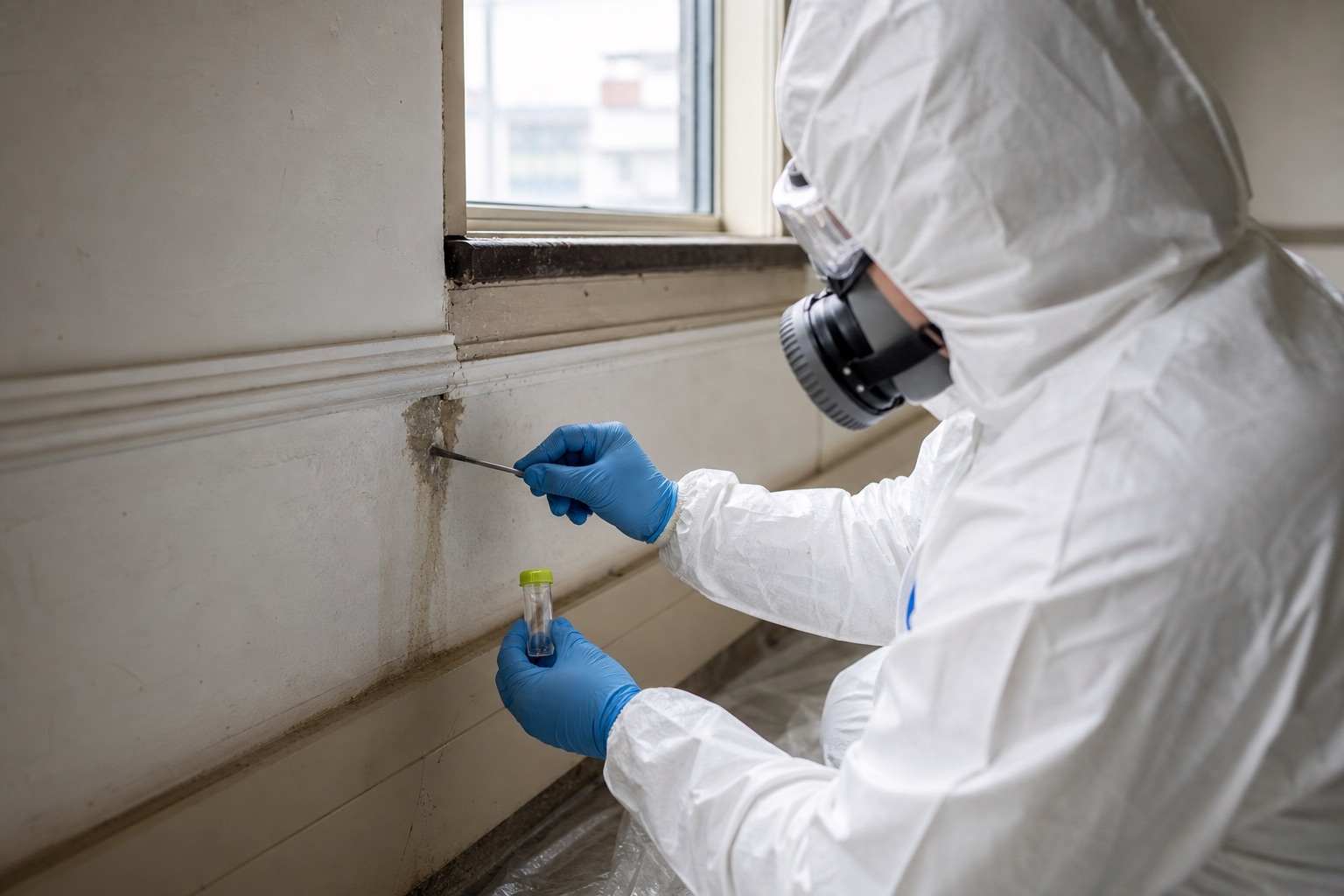
A licensed NJ inspector visits your property. Suspect materials are identified and small bulk samples are collected using EPA-approved methods. The inspector wears appropriate PPE and the sample area is sealed after collection. On-site time is typically 2 to 4 hours depending on the size of the property and number of materials to sample.
-
Certified Lab Analysis
Samples are submitted to an accredited NJ laboratory for polarized light microscopy (PLM) analysis. Lab turnaround is 24 to 72 hours from the time samples arrive. Rush analysis is available for time-sensitive projects.
-
Written Report
You receive a written report identifying all materials tested, the asbestos content found in each (or confirmed absence), the type of asbestos fiber identified, and the material’s friability and condition. The report includes recommended next steps for any positive findings. This document is what you provide to your contractor, your insurer, or the NJ DEP if notification is required.
-
Next Steps Guidance
We walk you through the findings and explain your options. If asbestos-containing materials were identified, we outline what abatement or encapsulation is required before your planned work can proceed. There is no pressure for any particular service, and no obligation beyond the testing scope you contracted.
Why DIY Test Kits Are Not Sufficient for NJ Legal Compliance
Hardware store asbestos test kits allow you to collect your own samples and mail them to a laboratory. The results may accurately identify whether asbestos is present in that specific sample. But for New Jersey legal compliance, a DIY kit falls short in several important ways.
NJ Admin Code 12:120 requires that asbestos surveys and abatement work be conducted by licensed professionals. A self-collected sample does not meet the chain-of-custody and documentation standards required for regulatory compliance. If your project is subject to NJ DEP notification requirements, self-collected samples will not satisfy those requirements. And if a licensed abatement contractor is doing the work, they will require testing that was conducted by a licensed inspector using accepted protocols.
There is also the issue of sample location and judgment. A trained inspector assesses the full scope of suspect materials in a space. A homeowner collecting one sample from the most visible surface may miss materials in other locations that are equally or more concerning. Professional inspection ensures the survey is complete.
For property transactions, insurance claims, or any situation where documentation matters, professional testing with a proper written report is the standard. DIY kits do not produce that documentation. For more information on federal asbestos guidance, see EPA asbestos resources.
When testing is legally required in NJ:
Before any renovation or demolition work in buildings where asbestos may be present. Essex County requires NJ DEP notification for projects disturbing more than 3 linear or 3 square feet of asbestos-containing material. Failure to test and notify when required exposes property owners, landlords, and contractors to significant fines and remediation liability.
Not sure whether your project requires testing? Call (973) 561-2655. We will ask a few questions about your property and your plans and tell you exactly what is required before any formal engagement begins.
Once testing is complete and asbestos-containing materials are identified, the next step is deciding between licensed removal and abatement or encapsulation, depending on the material type, condition, and your project plans.
Common Questions
Asbestos Testing Questions
On-site inspection and sample collection takes 2 to 4 hours for a typical residential property, depending on the number of suspect materials and the accessibility of areas to be sampled. Laboratory analysis takes 24 to 72 hours from the time samples arrive at the certified lab. Rush analysis is available for time-sensitive renovation or pre-closing deadlines. We provide written results as soon as the lab report is returned, along with a plain-language summary of findings and recommended next steps. Most clients have their written report within 3 to 4 business days of the initial inspection.
DIY test kits can confirm whether a single sample contains asbestos, but they do not meet New Jersey’s requirements for licensed inspection documentation. NJ Admin Code 12:120 requires that asbestos surveys be conducted by a licensed inspector. If you are planning a renovation or demolition and need documentation for contractor compliance, NJ DEP notification, or a property transaction, you need professional testing. A self-collected sample will not satisfy those requirements. For personal awareness, a kit may give you useful preliminary information, but it should not be treated as a substitute for professional inspection in a regulated context.
In Newark’s pre-1980 housing stock, the materials most frequently confirmed positive for asbestos in our inspections are: spray-applied popcorn ceiling texture, 9-inch and 12-inch vinyl floor tiles and their adhesive, pipe and boiler insulation (particularly in basements and mechanical rooms), and drywall joint compound. Roofing felt, window caulking, and textured wall coatings are also tested regularly. No single material is guaranteed to contain asbestos, and no material can be ruled out without a test. A thorough inspection samples everything suspect in the scope of planned work.
A positive test result means the material contains asbestos. The appropriate next step depends on the material type, its condition, and what you plan to do with it. If the material is in good condition and will not be disturbed, monitoring or encapsulation may be appropriate. If the material is friable, in poor condition, or will be disturbed by planned renovation or demolition work, licensed removal under NJ Admin Code 12:120 is required. We walk through the findings with you and explain each option. If NJ DEP notification is required for your project scope, we explain that process as well. See our pages on asbestos removal and encapsulation for more detail on each path.
Service Area
Serving Newark and Essex County Communities
Asbestos testing and inspection for residential, commercial, and industrial properties throughout the region. 50-mile service radius from Newark.