
Asbestos in Newark NJ Homes — What Brick City Residents Need to Know
A practical guide for Newark homeowners, renters, and landlords on where asbestos is found in older homes, when it is a concern, and what New Jersey law requires before renovation or demolition.
Quick Answer
Asbestos is present in a significant percentage of Newark homes built before 1980. The most common locations are pipe and boiler insulation, floor tiles and tile adhesive, and spray-applied ceiling texture. Asbestos does not pose a health risk when it is undisturbed and in good condition. It becomes dangerous when fibers are released into the air by cutting, scraping, grinding, or deterioration. Testing by a licensed NJ inspector is required before any renovation that could disturb these materials.
Why Newark Homes Are More Likely to Contain Asbestos Than Newer Construction
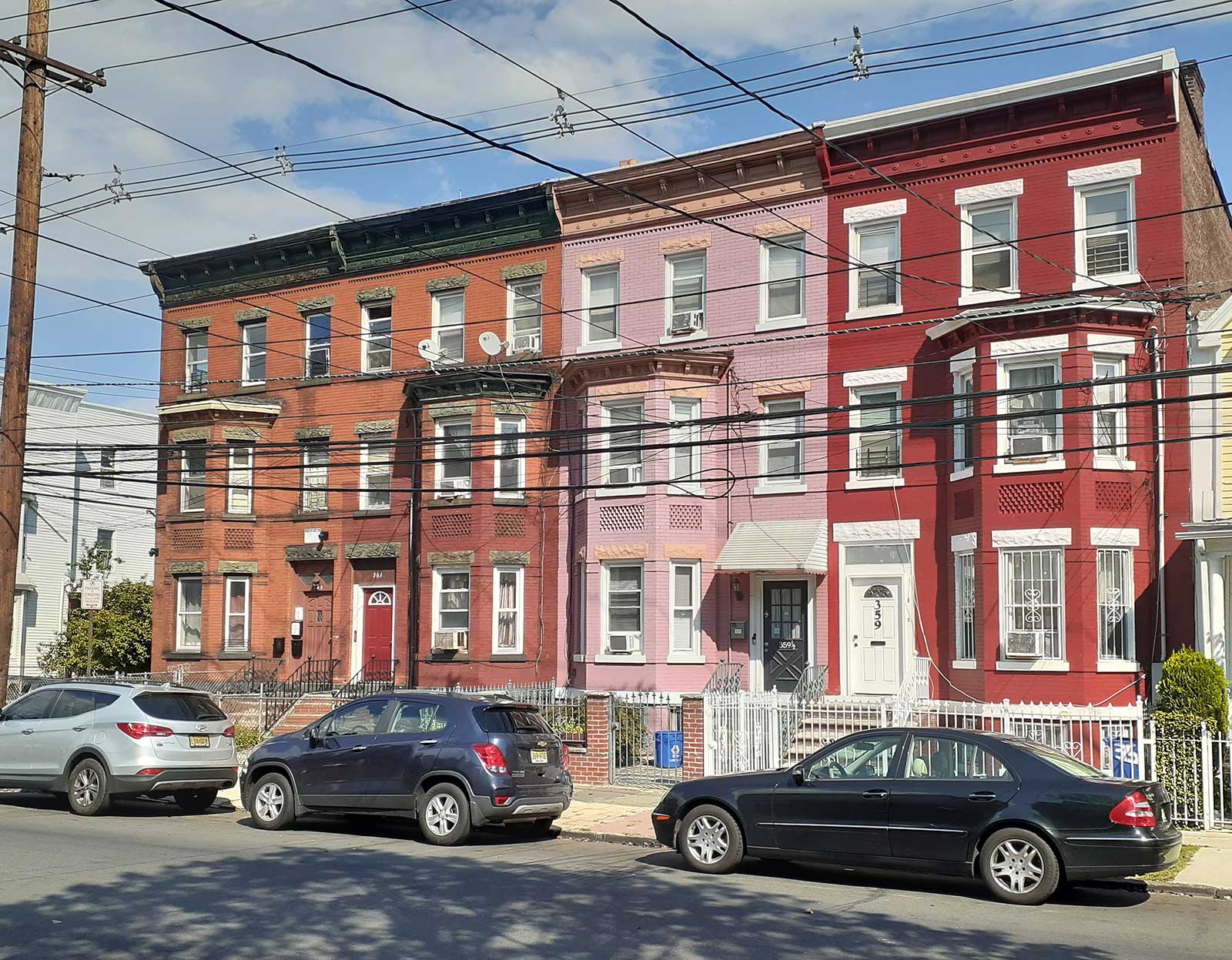
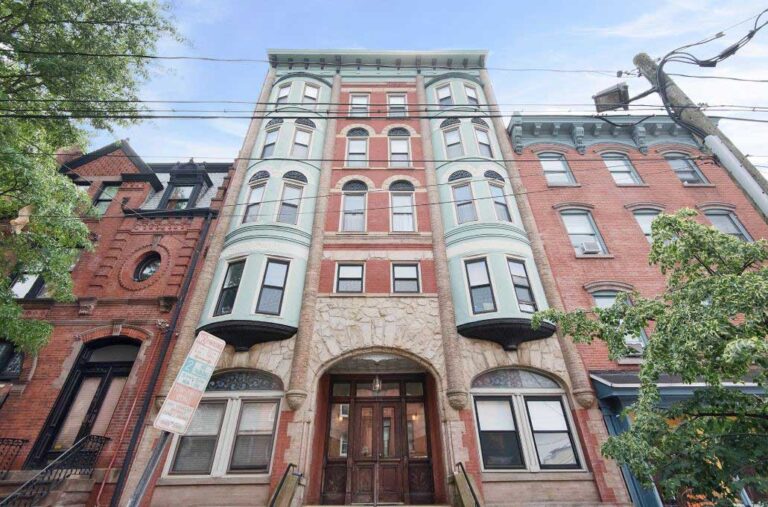
Newark is one of the oldest cities in the United States, incorporated in 1693, and a large share of its residential housing stock predates 1980. The city’s two-family homes, row houses, multi-unit apartment buildings, and older single-family homes in neighborhoods like Weequahic, Forest Hill, the Ironbound, and Vailsburg were largely constructed during the decades when asbestos was in widespread commercial use as a building material.
Asbestos use in building materials peaked in the 1960s and early 1970s, with federal restrictions beginning to take hold in the late 1970s. A Newark home built in 1955 may have asbestos in 5 or 6 different material categories. A home built in 1975 may have asbestos in fewer materials but is still likely to contain at least one or two. A home built in 1982 is unlikely to contain asbestos in most contexts, though it is not impossible if pre-ban products were used.
The bottom line: if your Newark home or investment property was built before 1980, treat asbestos as a realistic possibility until proven otherwise by testing. Do not plan renovation work that involves ceiling, floor, or mechanical system disturbance without testing the affected materials first.
Where Asbestos Is Most Commonly Found in Newark Homes
Pipe and Boiler Insulation
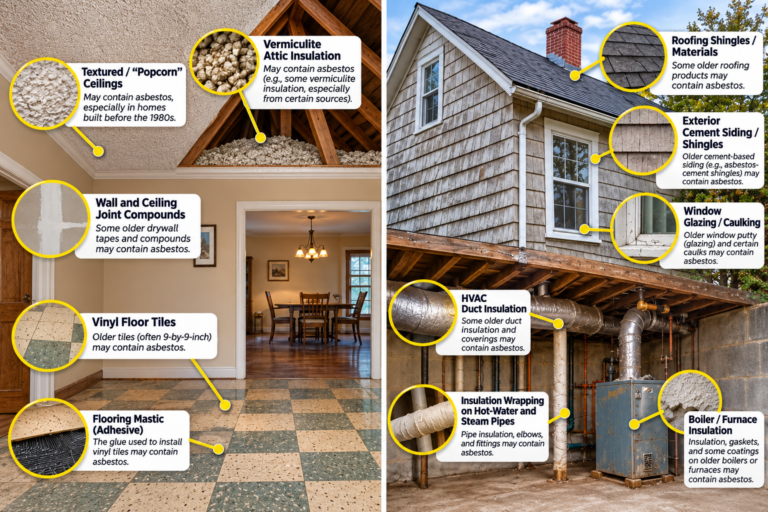
This is the most commonly encountered asbestos-containing material in Newark’s older homes. The pipe wrap, elbow covers, and boiler block insulation found in basements and mechanical rooms throughout the city frequently contain significant asbestos content. Corrugated paper pipe wrap and pre-formed pipe sections installed on hot water and steam systems before 1980 are the primary forms.
This material is particularly concerning because it becomes friable (easily crumbled) as it ages and deteriorates. Friable asbestos pipe insulation releases fibers passively without any mechanical disturbance. If you have deteriorating, crumbling pipe insulation in your basement, do not touch it. Contact a licensed inspector for an assessment. Learn more about pipe insulation asbestos removal.
Vinyl Floor Tiles and Adhesive
Nine-inch and twelve-inch vinyl floor tiles (VAT) manufactured before 1980 are among the most common positive test results we see in Newark residential properties. These tiles were installed in virtually every room type and were particularly prevalent in kitchens, bathrooms, and basements. The black mastic adhesive used to install them also frequently contains asbestos.
Intact VAT that is not being disturbed poses minimal risk. The danger comes from renovation work: scraping, grinding, sanding, or cutting VAT releases fibers. These activities require licensed abatement. Learn more about floor tile asbestos removal.
Popcorn and Textured Ceiling Coatings
Spray-applied ceiling texture installed before 1978 frequently contains asbestos. Newark’s older apartment buildings and row houses have these ceilings in living rooms, bedrooms, and hallways throughout entire buildings. Undisturbed, in-good-condition popcorn ceiling is generally not a health concern. Any renovation that requires scraping, sanding, or significant ceiling disturbance requires licensed testing and, if positive, licensed abatement before work can proceed. Learn more about popcorn ceiling asbestos removal.
Drywall Joint Compound
Joint compound used in drywall installation before 1977 commonly contained asbestos. Sanding drywall in older Newark homes, whether for repair or renovation, can release asbestos fibers from the compound layer. This is frequently overlooked by contractors and homeowners who associate asbestos primarily with insulation or ceiling materials.
Roofing and Siding Materials
Asphalt roofing felt, roof shingles, and certain fiber cement siding products manufactured before 1980 may contain asbestos. These materials typically do not pose an indoor air quality concern in good condition, but demolition, tear-off, or significant repair work can disturb the material and requires testing first.
What “Asbestos Is Safe If Undisturbed” Actually Means
You have probably heard that asbestos is only dangerous when disturbed. This is true in a practical sense: asbestos fibers must be inhaled to cause disease, and they must become airborne to be inhaled. Intact, non-friable asbestos-containing materials that are not being disturbed do not release fibers in significant quantities under normal conditions.
But “undisturbed” has limits. Deteriorating pipe insulation that is already crumbling is disturbing itself through the aging process. Materials in areas of frequent physical contact or maintenance are regularly disturbed in small ways. And any renovation work changes the equation entirely: cutting, drilling, scraping, sanding, or demolishing any building material can release fibers if that material contains asbestos.
The practical guidance for Newark homeowners is: do not panic about asbestos-containing materials that are intact and in good condition, but do not assume you can proceed with any renovation involving those materials without proper testing and compliance with NJ law.
New Jersey Law and What It Requires of Homeowners
NJ Admin Code 12:120 governs asbestos work in the state of New Jersey. Key requirements that affect Newark homeowners include:
- Any asbestos abatement work must be performed by a licensed NJ asbestos contractor
- Asbestos surveys must be conducted by a licensed inspector before renovation or demolition that may disturb ACM
- Projects disturbing more than 3 linear feet or 3 square feet of asbestos-containing material require advance NJ DEP notification
- All removed asbestos-containing material must be disposed of at a licensed hazardous waste facility
- Air clearance testing is required before a work area can be re-occupied after abatement
These are not optional guidelines, they are legal requirements. A homeowner who hires an unlicensed contractor to remove asbestos is in violation of these requirements and can face fines, mandatory remediation at their own expense, and significant liability exposure. The NJ Department of Labor can and does enforce these regulations.
The good news is that compliance is straightforward: get the material tested before any renovation work that could disturb it, and hire a licensed contractor for any abatement that is needed. For the full testing and removal process, see our pages on asbestos testing and asbestos removal.
Common Questions
Asbestos in Newark Homes: FAQ
If you are not planning any renovation or disturbance of building materials, and all the materials in your home are intact and in good condition, asbestos-containing materials pose minimal daily risk. You do not need to test proactively if no renovation is planned. However, if you are planning any renovation that involves ceilings, floors, pipe or boiler systems, or walls in a pre-1980 home, testing the affected materials before work begins is required by NJ law and is the only way to know what you are dealing with. The concern is not the presence of asbestos, it is the disturbance of asbestos-containing materials without taking appropriate precautions.
DIY asbestos test kits are available from hardware stores and allow you to collect a sample and mail it to a laboratory. However, self-collected samples do not satisfy NJ’s requirement for a licensed inspector to conduct the survey for legal compliance purposes. For renovation planning, contractor compliance, or property transactions, professional testing with a written report from a licensed NJ inspector is required. If you are simply curious whether a specific material in your home contains asbestos, a DIY kit may give you useful preliminary information, but it should not be relied on for any regulatory or compliance purpose.
No. NJ Admin Code 12:120 requires that suspect asbestos-containing materials be assessed before renovation or demolition work that could disturb them. A contractor who proceeds without testing in a pre-1980 building is not in compliance with NJ regulations. This puts you, as the property owner, at risk as well. The contractor may be unaware of the requirement, or they may be trying to avoid the delay and cost of testing. Either way, the liability for non-compliance falls on the property owner when it is your building. Require written documentation of asbestos testing results before allowing any renovation work to proceed in a pre-1980 Newark property.
Licensed asbestos contractors in New Jersey are certified through the NJ Department of Labor and Workforce Development under NJ Admin Code 12:120. You can request a contractor’s license number and verify it with the NJ DOL. Any legitimate licensed contractor should be able to provide their license number without hesitation. Newark Asbestos Removal is a licensed NJ asbestos contractor. Call us at (973) 561-2655 or contact us through our online form for a free assessment of your property.
4 Comments